Jim Beam Shuts Down, Exports Crater, and a Hot Dog Bottle Flips for $1,000
Jim Beam's Clermont shutdown drags on, US whiskey exports to the EU drop 35%, Knob Creek launches a new series, and a Costco hot dog bourbon hits four figures on the secondary market.
On This Page
The bourbon industry is three months into Jim Beam's Clermont shutdown. Export numbers for 2025 are in, and they confirm what distillers feared. A couple of new releases landed this week that are worth tracking. And someone paid $1,000 for a bourbon with a hot dog on the label.
- US whiskey exports to the EU fell 35% in 2025, the sharpest single-market decline in the category1
- Jim Beam's Clermont distillery remains dark through year-end, with 16.1 million barrels sitting in Kentucky warehouses2
- Knob Creek launched Blender's Edition, a new limited series starting at 10 years and 106 proof for $44.993
- Michter's confirmed April availability for its 2026 Shenk's Homestead ($110) and Bomberger's Declaration ($120)4
- A Costco "hot dog bourbon" from Rare Character flipped for $1,000 after selling out in hours at $85.995
Track new releases as they drop
Set up a watchlistThe Distilled Spirits Council released its 2025 export report last week, and the headline is blunt: American whiskey exports dropped 19% worldwide1. Exports to the EU, the category's largest foreign market, fell 35%6. Total US spirits exports declined 3.8%.
Some of that decline is artificial. Producers front-loaded shipments in late 2024 to beat a potential EU tariff reimposition, which inflated 2024 numbers and deflated 2025. But the structural headwinds are real. The EU's proposed 50% tariff is suspended through August 2026, not eliminated. Canada, once a $100-million-a-year market for American whiskey, has seen exports drop roughly 42%2.
The bright spot: exports to the rest of the world rose 13.2%, led by Brazil, the UK, Australia, and several emerging markets1. The industry is diversifying its customer base, but losing Europe and Canada at the same time puts serious pressure on pricing power.
Jim Beam shut down its main Clermont campus on January 1 and has not distilled a drop there since2. The Freddie Booker Noe craft distillery and the larger Booker Noe Distillery in Boston, Kentucky, continue operating. Bottling and warehousing at Clermont are still active.
The math behind the decision is straightforward. Kentucky warehouses now hold 16.1 million barrels of aging bourbon, the highest level since Prohibition's repeal and a 27% increase from 20242. Gallup found that the share of US adults who drink alcohol has fallen to 54%, near a 90-year low. Beam Suntory is managing surplus, not signaling retreat.
For consumers, this changes nothing in the near term. Bourbon aged 4 to 12 years is abundant. The effects of a year without Clermont production would not show up on shelves until the early 2030s, and only if demand recovers.
Knob Creek Blender's Edition 01
Knob Creek launched a new limited series with Edition 01, a 10-year bourbon bottled at 106 proof3. The suggested retail is $44.99. Eighth-generation master distiller Freddie Noe and his blending team selected barrels to emphasize the sweeter side of Knob Creek's profile: vanilla custard, caramel, baking spices. A deliberate contrast to the brand's classic 100-proof, rye-forward character.
At $45 for a 10-year, 106-proof limited edition from a major distillery, this is one of the better value propositions in the current market. Future editions will explore different flavor dimensions. Worth grabbing if you see it.
Michter's Legacy Series: Shenk's and Bomberger's 2026
Michter's confirmed April availability for its annual Legacy Series releases4. Shenk's Homestead Kentucky Sour Mash Whiskey returns at 91.2 proof ($110), and Bomberger's Declaration Kentucky Straight Bourbon at 108 proof ($120). Both are limited allocation. Michter's does not publish batch sizes, so finding these at retail requires some legwork. Check your local stores if these are on your list.
Garrison Brothers Lady Bird 2026
Garrison Brothers released its 2026 Lady Bird on April 4 at the distillery in Hye, Texas7. The honey-infused, Cognac-finished bourbon is bottled at 114 proof ($179.99). New this year: a Cask Strength Single Barrel edition at $189.99. The first 2,000 bottles went to walk-ins at the distillery. Online sales open April 13. A total of 7,000 bottles of the standard Lady Bird will hit retail in May.
This is a Texas bourbon with a seven-year production process (four years in new oak, eight to nine months with wildflower honey, three years in Cognac XO casks). Polarizing for purists, but the execution is consistent year to year. A portion of sales benefits the Lady Bird Johnson Wildflower Center.
Coming Later This Month: Kentucky Peerless 10 Year
Kentucky Peerless will release its first 10-year-old bourbon on April 22 at the Louisville distillery8. Henry Kraver's Old Reserve Bourbon, Batch 1, is bottled at barrel proof (117.6 proof), sweet mash, non-chill filtered. One bottle per person. Future batches will release annually on Henry Kraver's birthday. Tasting notes mention bread pudding, burnt brownie edges, mocha, and candied orange peel. This will be competitive to find. Plan accordingly.
A Rare Character single barrel bourbon showed up unannounced at a Washington, D.C.-area Costco with a label reading "I Got That Dog in Me" and featuring Costco's iconic $1.50 hot dog combo5. Priced at $85.99, it is an 11-year, 4-month Kentucky straight bourbon at 126.1 proof. One bottle per customer. It sold out within hours.
Within days, bottles appeared on the secondary market for $1,0009. The bourbon itself is well-regarded (Rare Character sources quality barrels), but the premium is driven entirely by the novelty label and Costco scarcity mechanics. If you are buying this to drink, $86 for an 11-year cask-strength bourbon is reasonable. If you are buying to flip, you are the reason allocation exists.
- Michter's Legacy drops landing at retailers this month. Check Drops for sightings.
- Kentucky Peerless 10 Year on April 22. If you are within driving distance of Louisville, this is worth the trip.
- EU tariff suspension runs through August. Any trade negotiation headlines between now and then will move the bourbon market.
- Jim Beam inventory data later this quarter. The industry is watching whether other producers follow Beam's lead on production cuts.
See new bottles hitting shelves near you
Check the drop mapSources & methodology9 sources
Every claim in this issue links to its source. Reporting draws on distiller announcements, regulators and trade outlets, and prices are suggested retail at the time of publication.
Footnotes
-
DISCUS, "U.S. Spirits Exports Decline 3.8% in 2025," March 31, 2026 ↩ ↩2 ↩3
-
PBS News, "Jim Beam to close one of its Kentucky distillery for a year," January 2026 ↩ ↩2 ↩3 ↩4
-
Breaking Bourbon, "Knob Creek Debuts Blender's Edition," March 31, 2026 ↩ ↩2
-
Michter's Press Release, "2026 Legacy Series," March 24, 2026 ↩ ↩2
-
Inc., "Costco's Limited-Edition Hot Dog Bourbon Is Selling Out Overnight" ↩ ↩2
-
The Spirits Business, "US whiskey exports to EU plunge 35% in 2025," April 2026 ↩
-
Garrison Brothers Press Release, "2026 Lady Bird," March 2026 ↩
-
Breaking Bourbon, "Kentucky Peerless 10-Year-Old Bourbon," March 2026 ↩
-
Fox News, "Costco hot dog bourbon triggers buying frenzy with $1,000 resale prices" ↩
More in Industry News

Bourbon News: Lochs of Jura Wins the IWSC and Woodford Turns 30
Lochs of Jura takes the IWSC American Whiskey Trophy, a bonded Old Bardstown wins the Bourbon Trophy, Woodford turns 30, and Copper & Cask goes 10 years.
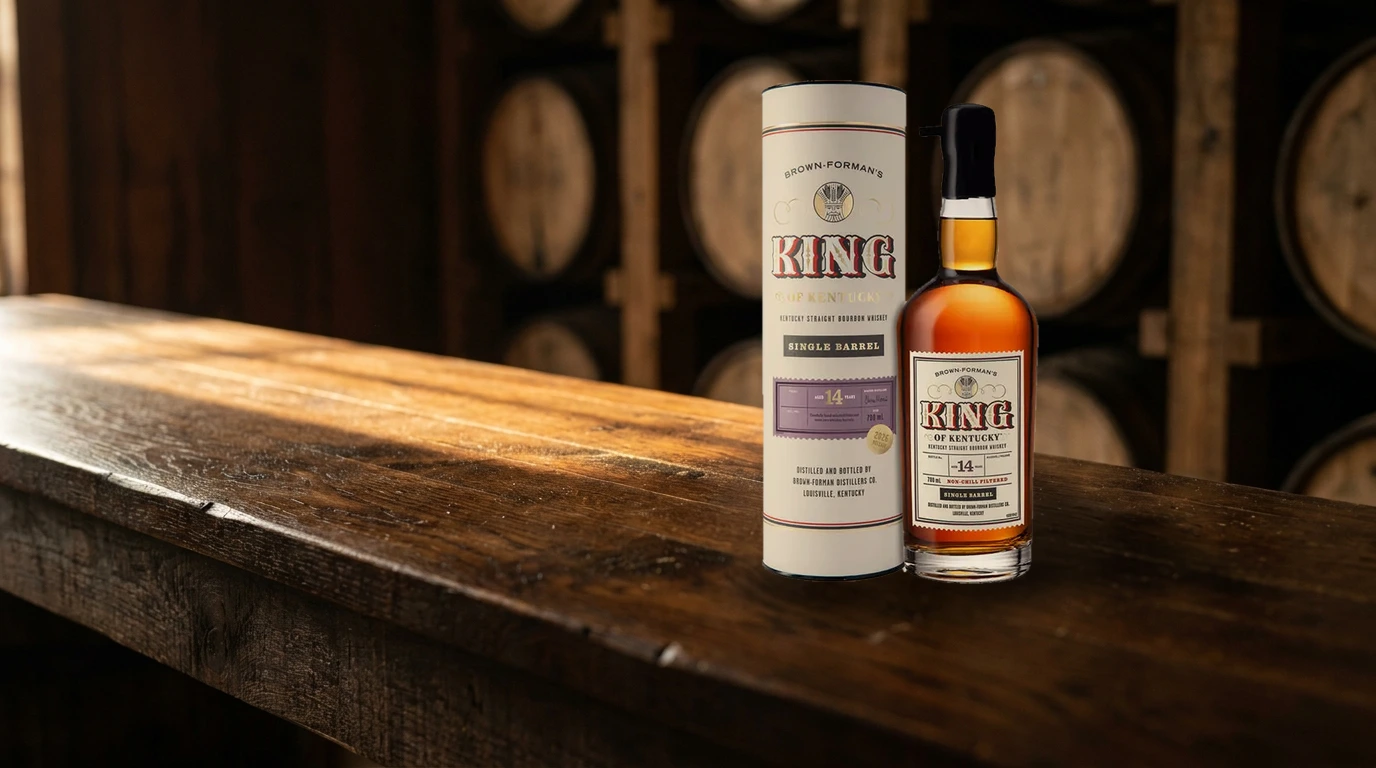
Bourbon News: King of Kentucky Goes 14 Years and the FTC Settles
Brown-Forman's King of Kentucky returns at 14 years and $399, the FTC settles its pricing case with Southern Glazer's, and Lost Lantern bottles George Dickel.

Bourbon News: Willett Goes Cask Strength and Jefferson's Gets Older
Willett releases Pot Still Reserve at cask strength for $67 twice a year, Jefferson's Reserve gains an 8-year age statement and 96 proof, and Canada is banned.