Earth Day Bourbon: Why Frey Ranch Sets the Estate Standard
Estate-grown bourbon is rare. Frey Ranch raises every grain on one Nevada farm, and a handful of other distilleries get close. A measured look for Earth Day 2026.
On This Page
Got a tip? Know about an upcoming release, a shelf find, or industry news worth covering? Send it our way. We read every submission.
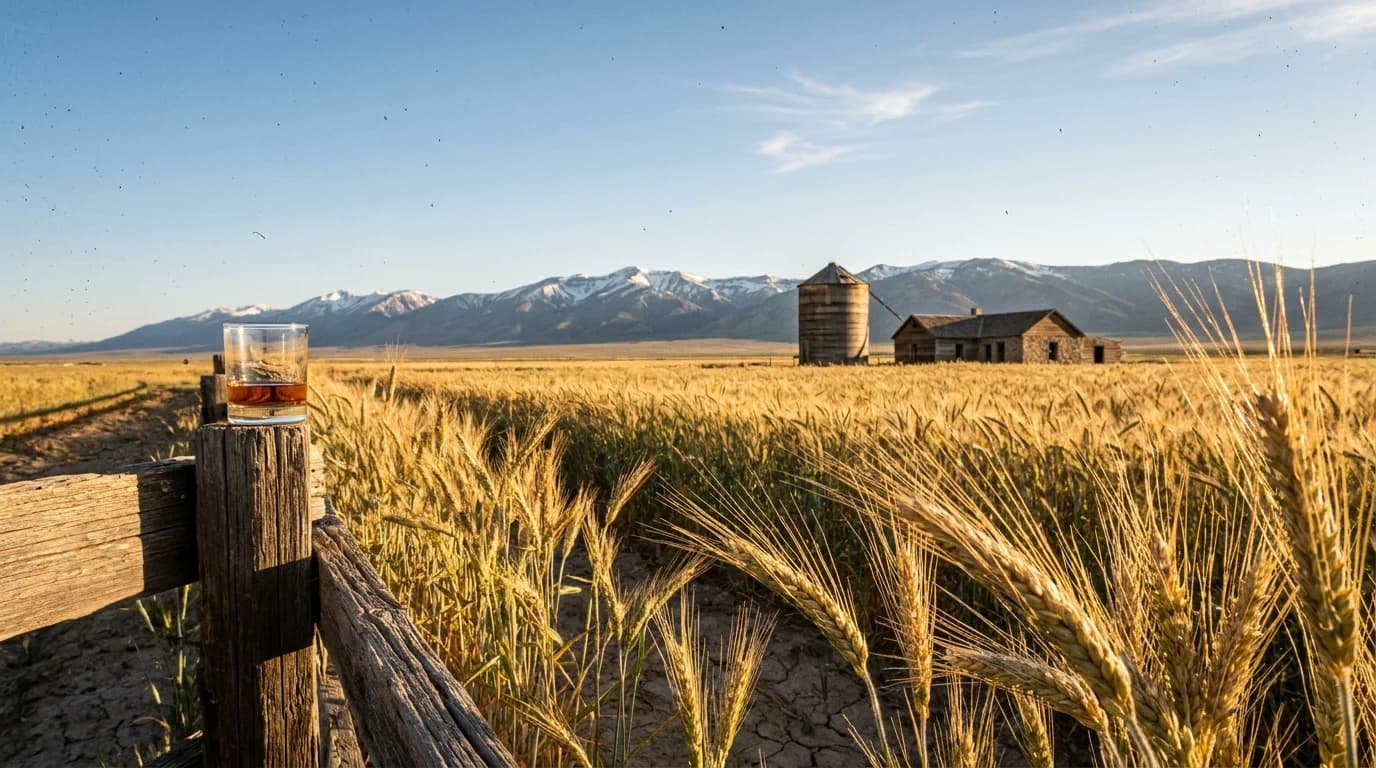
Colby and Ashley Frey raise corn, rye, wheat, and barley on land their family has farmed since 1854. Then they distill it into bourbon on the same property, about an hour east of Reno. No grain trucks from Iowa. No sourced barrels wearing craft-brand labels. One farm, one mashbill, one bottle.
That is what "estate" means in bourbon. Count the American producers who can say the same and you will not get past four.
What Gets Called "Craft" and What Actually Is
Walk the craft aisle at any well-stocked bourbon shop and you will see a lot of bottles with state flags and barn photography on the label. Most of that grain comes from the same handful of commodity grain elevators in the Midwest that supply the major Kentucky distilleries. The "craft" part is often the mash tub, the yeast strain, or the warehouse location. The grain itself is usually sourced.
That is not a knock on those bourbons. Some are excellent. It just makes the farm imagery on the label misleading.
Estate-grown means something narrower: the distillery either owns, or contracts exclusively with, the named land where every grain in the mashbill was raised. Four current American producers come close to this standard, in rough descending order of strictness:
- Frey Ranch (Fallon, Nevada): 100% of all four grains raised on the distillery's own 1,500-acre farm1
- Garrison Brothers (Hye, Texas): all corn Texas-grown, with a meaningful portion from the distillery's own property2
- Wyoming Whiskey (Kirby, Wyoming): all grain sourced from a single county, using non-GMO varieties3
- Widow Jane (Brooklyn, New York): heirloom corn grown under contract on a single Hudson Valley farm4
Estate provenance does not guarantee better bourbon. It guarantees a more consistent one. The same soil, the same water table, the same variety year after year shows up in the glass as a tighter fingerprint.
Estate-grown is not the same as "single origin." A few distilleries advertise single-origin grain, meaning all from one supplier, but that supplier may operate across multiple states and farms. Frey Ranch is true estate. Wyoming Whiskey and Widow Jane are closer to strict single-origin with geographic limits.
The Case for Frey Ranch
Frey Ranch Straight Bourbon
Suits: Drinkers curious about what single-farm grain tastes like in the glass
The four-grain mashbill is the point here. Corn sweetness gets structured by winter rye spice, softened by winter wheat, and finished with a malted barley nutty edge. At 90 proof and around $70, it sits in the same price tier as Knob Creek Single Barrel or Elijah Craig Small Batch, neither of which raises a single grain.
Explore in Digital Dram catalogTwo details separate this bottle from its shelf neighbors. All four grains are fall-planted winter varieties, which grow slower and develop more starch in the kernel. Most bourbon grain is spring-planted spring corn. Second, the distillery's altitude (about 4,000 feet) and Nevada high-desert climate swings push more aggressive seasonal extraction through the barrels than you get in a warehouse in Bardstown. You can taste it. The oak arrives earlier than the age statement suggests.
Frey Ranch Farm Strength Single Barrel
Suits: Verifying whether the estate-grain signature survives at cask proof
Barrel proof strips the dilution and reveals more of the rye and barley character. Expect toasted grain, black pepper, and a noticeably tannic finish from the high-altitude aging. Proof varies by barrel, anywhere from 115 to 125. Single-store picks run $90-110 depending on market.
Explore in Digital Dram catalogThree More Estate-Leaning Bottles Worth a Pour
Garrison Brothers Small Batch
Suits: Understanding how Texas Hill Country heat bends the aging curve
Garrison Brothers raises a meaningful portion of their corn on the Hye, Texas property and sources the rest from Texas farms. The wheated mashbill plus extreme summer temperatures produce a young bourbon that drinks older than its years. Stone fruit, cinnamon, and a drying oak finish.
Explore in Digital Dram catalogBalcones Baby Blue
Suits: Tasting what a heritage grain variety actually does in the glass
Not technically a bourbon, the mashbill is single-grain corn, but relevant for Earth Day. Roasted Hopi Blue Corn adds a savory cornbread-crust note that commodity yellow dent corn cannot produce. The flavor case for preserving heirloom grain shows up directly on the palate.
Explore in Digital Dram catalogWyoming Whiskey Small Batch
Suits: A softer estate option for drinkers who lean toward wheated profiles
All grain comes from a single county in northeast Wyoming, and the distillery uses artesian limestone water from an on-site well. Softer and less intense than Frey Ranch, with honey, cooked apple, and a clean finish. The low proof is deliberate and it suits the grain bill.
Explore in Digital Dram catalogThe Real-World Mess
Estate-grown does not translate to wide availability. Frey Ranch expanded distribution through 2024 and 2025, but Farm Strength and Single Barrel picks still move fast at the regional level. California and Nevada see most of the allocation. Texas and Florida get partial shares. Outside those states, you are hunting.
Price is the other catch. A single-farm operation cannot match the per-bottle economics of a distillery that buys 20,000 tons of commodity corn a year. Frey Ranch Straight at $70 looks expensive next to Buffalo Trace at $30. The gap is the grain operation, the altitude, and the scale. Not padding.
Estate is also not a flavor guarantee. Plenty of sourced-grain bourbon tastes excellent. Plenty of single-farm bourbon tastes ordinary. The case for estate is transparency and consistency. Not a free upgrade to the palate.
One Bottle for Earth Day
If you are opening something tonight and want it to match the day: pour the Frey Ranch Straight. It is the one bottle on American shelves where every grain, the distillation, the barreling, and the aging happened on the same square mile of land. That fact alone is worth the price of admission. The bourbon is good, which is almost a bonus.
Until the Digital Dram team can make the trip out to Fallon and walk those fields ourselves, we are pouring a glass tonight and calling that our Earth Day.
Keep Reading
Add any of these bottles to your cellar and Digital Dram will track how your palate responds over time. Start your cellar or add tasting notes from a blind pour.
Footnotes
More in Distilleries

Bourbon Distilleries & Brands: The Complete Guide
How the big bourbon distilleries and their brands connect, which bottles share a mash bill, and how to find a stand-in when the allocated one is gone.
Maker's Mark Distillery Guide: Every Expression Worth Knowing
A complete guide to Maker's Mark Distillery: the wheat decision, the production philosophy, and every expression from the flagship to Cellar Aged.
Stagg vs E.H. Taylor: Two Buffalo Trace Icons Compared
George T. Stagg and E.H. Taylor Small Batch compared side by side. Proof, flavor profiles, availability, and which suits your palate.