Willett Goes Cask Strength and Jefferson's Gets Older
Willett releases Pot Still Reserve at cask strength for $67 twice a year, Jefferson's Reserve gains an 8-year age statement and 96 proof, and Canada is banned.
On This Page
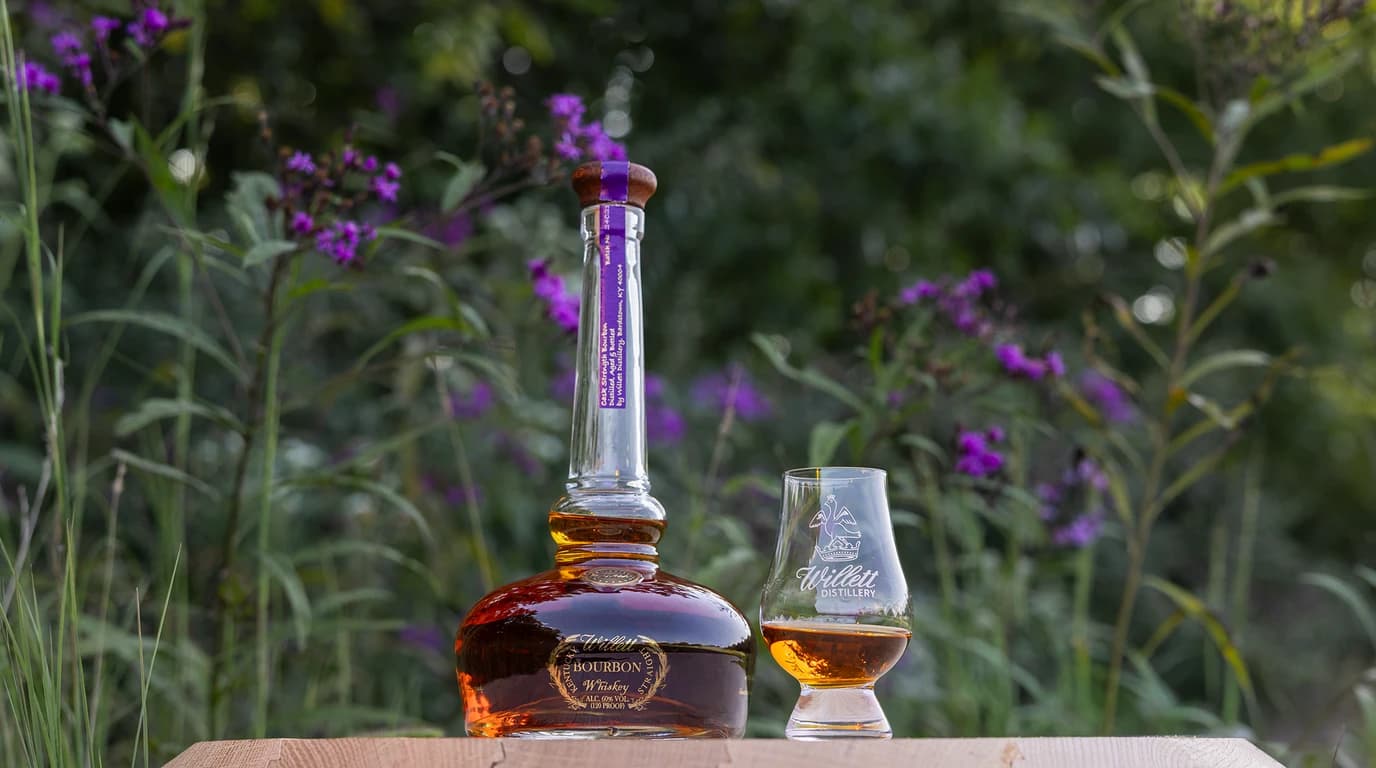
Willett has spent years keeping its cask-strength bourbon inside the Bardstown gift shop. This week it put one in the famous pot still bottle, priced it at $67, and promised a new batch every equinox. Jefferson's went the other direction from most of the industry and added years and proof to its core lineup. And tomorrow morning, the United States stops admitting Canadian whisky at the border, the latest turn in a fight that bourbon has been losing since early 2025.
A quieter week than the last two, and a more useful one for anyone who buys bottles at retail rather than by drawing.
- Willett Pot Still Reserve Cask Strength is a batch-proof wheated bourbon at $67, distributed nationally and released on every spring and fall equinox12
- Jefferson's Reserve now carries an 8-year age statement at 96 proof, and Very Small Batch moves to 88 proof, with new labels across the line34
- The Canadian alcohol import ban takes effect September 29, closing the border to packaged Canadian spirits while American spirits stay off shelves in most of Canada56
- Knob Creek 12 Year Cask Strength is reaching shelves nationwide at 121.2 proof and $89.99, the first time since 20207
- Hooten Young announced two small releases with October presales: a 10-year, 107-proof bourbon for $65.99 and a 7-year, 96-proof bourbon for $45.9989
Keep the equinox bottles on your list
Set up a watchlistThe standard Willett Pot Still Reserve has been a 94-proof small batch in that copper-still-shaped bottle for a long time. The new Cask Strength version keeps the bottle and drops the dilution. The mash bill is 65 percent corn, 20 percent wheat and 15 percent barley, the whiskey goes into the barrel at 115 proof, and each batch is bottled at whatever strength it reaches, with that number printed on the bottle12. Suggested retail is $67, and it is going into national distribution rather than staying in Bardstown1.
The cadence is the interesting part. Willett says a new batch arrives on each spring and fall equinox, so twice a year on a date you can put in a calendar12. The distillery's cask-strength output has mostly been Family Estate single barrels and gift-shop bottles, which is to say things you drove to Kentucky for or paid a stranger for. That history is the whole reason the name carries weight; our distillery guides cover how a family bottler in Bardstown ended up with that kind of pull. A scheduled, distributed, sub-$70 cask-strength release from the same house is a different product entirely, even if the liquid is younger than the single barrels that built the reputation.
Two caveats. Willett has not published an age statement for this, so you are buying on the mash bill and the proof, not on years1. And twice a year at a fixed date is precisely the kind of schedule that produces a line at the store on the morning of, so the first fall batch will move faster than the price suggests. The groundwork for catching bourbon drops applies here even though nothing about this bottle is technically allocated. Master distiller Drew Kulsveen framed it as a way to experience the wheated recipe at full proof and full body2. Wheated bourbon at cask strength is a narrower category than it sounds, and the reference points people reach for are mostly allocated. This one is not, yet.
A wheated mash bill at cask strength behaves differently from a rye recipe at the same proof. Rye brings its own heat and spice, so barrel-proof rye bourbons read as intense almost by design. (If the mash bill vocabulary is new, our Bourbon 101 guide covers what wheat and rye each do to a whiskey.) Wheat is softer, which means the alcohol has less to hide behind. Batch-to-batch variation matters more here than on a high-rye label, and the proof printed on the bottle is the single most useful number on it.
Jefferson's redesigned all four core expressions, Very Small Batch, Triple-Rye, Reserve and Ocean Aged at Sea, with color-coded labels and what the brand calls a clearer navigation system through the portfolio34. That would be a packaging story except for what happened to the liquid. Jefferson's Reserve now carries a minimum 8-year age statement and moves from 90.2 to 96 proof. Jefferson's Very Small Batch goes from 82.3 to 88 proof34. An age statement on a blended bourbon refers to the youngest whiskey in the blend, not the average, which is the detail most often misread; the rest of what a front label does and does not promise is in how to read a label.
For a core-range bourbon in 2026, that is the unusual direction. The last two years of industry news have been full of distilleries quietly dropping age statements, trimming proof, or both, while the barrel surplus in Kentucky warehouses sits at a record. Jefferson's is a blending house rather than a distiller, which cuts both ways: it can go buy older stock when it wants to, and it has to. Master blender Ale Ochoa said reaching the age statement meant going back through older, more mature barrels and building the blend with intention3. The tasting notes on the sheet run dark fruit and vanilla custard into baking spice, oak and toasted almond3.
What the announcement does not include is a price. Neither the brand's release nor either publication covering it lists a new suggested retail for the Reserve, and an 8-year statement plus six proof points is rarely free34. The 750ml bottles are rolling out now; 375ml, 1L and 1.75L sizes come later in the year4. If the shelf price on the new label lands within a few dollars of the old one, this is one of the better core-range upgrades of the year. If it jumps twenty, it is a different bottle competing in a different bracket, and the age statement will need to carry it.
At 12:01 a.m. Eastern on September 29, the United States stops admitting packaged Canadian beer, wine and spirits, under proclamations signed September 85. The stated justification is that Canadian provinces have been banning the purchase and retail of American alcohol while not restricting anyone else's, which the White House characterized as discrimination against American commerce5.
That part is not in dispute. Eight of Canada's ten provinces pulled American spirits from their shelves in early 2025, and the Distilled Spirits Council says United States spirits exports to Canada have fallen by more than 70 percent since56. Canada had been the second-largest export market for American whiskey. So a ban on Canadian whisky coming south is, from a bourbon distiller's seat, retaliation for a shelf they already lost.
It is also not what the industry asked for. Chris Swonger, the council's president, said American distillers have shouldered the brunt of this dispute for more than a year and a half, that the council does not want Canadian distillers to face similar hardship, and that it wants both governments back at the table to restore American spirits to Canadian shelves and return the sector to a permanent zero-for-zero tariff arrangement56. That is a trade group asking for its competitor's product not to be banned, which tells you how much distillers think a closed border helps them: not at all. Crown Royal and Canadian Club leave American shelves tomorrow. Buffalo Trace does not go back on Ontario shelves because of it.
For a bourbon buyer in the United States, the near-term effect is a hole in the Canadian whisky section and whatever brand shuffling retailers do to fill it. The longer effect is that an American distillery's export math for 2027 still has a zero where Canada used to be, and the barrels that were supposed to go there are still aging in Kentucky. That surplus is the story underneath every price cut and every quietly dropped age statement this year, and it got no smaller this week.
Knob Creek 12 Year Cask Strength was announced September 16 and is now in stores nationwide, 121.2 proof, $89.99, drawn from ten lots in the Clermont rickhouses7. This is the second cask-strength 12-year Knob Creek has ever bottled and the first since 2020. Eighth-generation master distiller Freddie Noe put it plainly: cask strength means the barrel gets the final say, and on this one they were glad to listen7. At under $90 for a 12-year age statement above 120 proof, it is the most sensible bottle on this page to actually go find, and it is limited, so it will not sit.
Hooten Young announced two October presales. Hooten Young Jack Carr Warrior Select is a 10-year Indiana bourbon at 107 proof, $65.99, 1,500 bottles, presale October 15 and shipping late October, timed to the second season of The Terminal List8. Ruger First-Fire, a collaboration with the firearms maker, is a 7-year bourbon at 96 proof, $45.99, 1,776 numbered bottles, presale October 14, sold with a pair of Nicaraguan cigars9. Both are bottled by Manifest Distilling in Jacksonville89. A ten-year sourced Indiana bourbon at 107 proof for $66 is a fair price in this market whatever you think of the tie-in.
Tamworth Distilling moved its Deerslayer venison whiskey, a rye infused with smoked venison, cranberries, porcini and juniper, from a 200ml novelty to a 500ml bottle at 99 proof and $4510. Founder Steven Grasse said the original took off on country radio almost immediately after its 2020 release and became a collector's item, which is the reason a 500ml exists10. Not bourbon, not for everyone, and the single most memorable release of the week.
Basil Hayden announced a fall partnership with the New York fashion label Rowing Blazers on September 24, with more drops promised through the holidays and a signature cocktail built on Basil Hayden Toast and blueberries11. File under brand marketing until a bottle appears.
No competition results were announced this week. The San Francisco World Spirits Competition names its Platinum medalists the week of October 19 and its Best of Class winners November 812.
September 28 to October 11: the Elmer T. Lee 40th Anniversary pickup window at Buffalo Trace in Frankfort. Anyone selected in the September 22 drawing has to collect in person during visitor hours13.
September 29: the Canadian import ban takes effect. Expect Canadian whisky to thin out over the following weeks as distributor stock runs down rather than vanish overnight5.
October 10: Four Roses 2026 Limited Edition Small Batch reaches select retailers and the Lawrenceburg visitor centers at $24914.
October 14 and 15: the Hooten Young presales, online only89.
Week of October 19: San Francisco World Spirits Competition Platinum medals12.
The one to think about is Willett's calendar. A distillery with that much secondary-market gravity choosing to release its cask-strength bourbon on a published date, twice a year, at $67, is betting that predictability sells better than scarcity. If the first fall batch reaches shelves at anything close to that price and stays there for more than a morning, the bet is right, and the next spring equinox will be the more interesting one.
Drink responsibly, and only if you are 21 or older.
Sources & methodology14 sources
Every claim in this issue links to its source. Reporting draws on distiller announcements, regulators and trade outlets, and prices are suggested retail at the time of publication.
Footnotes
-
Fred Minnick, "Willett Releases Pot Still Reserve Cask Strength," September 25, 2026 ↩ ↩2 ↩3 ↩4 ↩5
-
The Whiskey Wash, "Willett Pot Still Reserve Cask Strength Bourbon Debuts," September 23, 2026 ↩ ↩2 ↩3 ↩4
-
Fred Minnick, "Jefferson's Bourbon Updates Packaging, Proofs," September 22, 2026 ↩ ↩2 ↩3 ↩4 ↩5 ↩6
-
Whisky Advocate, "News Notes: Jefferson's Revamps Its Line, New Jack Daniel's RTD, Buchanan's Goes Coconut & More," September 25, 2026 ↩ ↩2 ↩3 ↩4 ↩5
-
The Spirits Business, "Trump bans Canadian spirits imports," September 9, 2026 ↩ ↩2 ↩3 ↩4 ↩5 ↩6
-
Distilled Spirits Council of the United States, "DISCUS Statement in response to President Trump's action to ban certain Canadian alcohol imports," September 2026 ↩ ↩2 ↩3
-
Breaking Bourbon, "Knob Creek Releases 12 Year Old Cask Strength, a Bold Expression of Time, Patience and Full Flavor," September 16, 2026 ↩ ↩2 ↩3
-
Fred Minnick, "Hooten Young Releases Jack Carr Warrior Select Bourbon," September 23, 2026 ↩ ↩2 ↩3 ↩4
-
The Whiskey Wash, "Hooten Young x Ruger Launch First-Fire Bourbon & Cigars," September 25, 2026 ↩ ↩2 ↩3 ↩4
-
Fred Minnick, "Deerslayer Venison Flavored Whiskey Gets a Size Upgrade," September 24, 2026 ↩ ↩2
-
The Whiskey Wash, "Basil Hayden Teams Up With Rowing Blazers for Fall Drops," September 25, 2026 ↩
-
The Whiskey Wash, "5 Double Gold Bourbons Battle for SFWSC 2026 Best of Class," 2026 ↩ ↩2
-
Breaking Bourbon, "Buffalo Trace Distillery Honors 40 Years of Elmer T. Lee Bourbon With First-Ever Uncut and Unfiltered Offering," September 2026 ↩
-
Breaking Bourbon, "Four Roses Set to Launch 2026 Limited Edition Small Batch on October 10," September 2026 ↩
More in Industry News
Bourbon News: King of Kentucky Goes 14 Years and the FTC Settles
Brown-Forman's King of Kentucky returns at 14 years and $399, the FTC settles its pricing case with Southern Glazer's, and Lost Lantern bottles George Dickel.

Bourbon News: Elmer T. Lee Goes Uncut and Booker's Pours a Second Rye
Buffalo Trace bottles Elmer T. Lee at barrel proof for the first time at $99.99, Booker's returns to rye with an apple brandy finish, Four Roses dates its oldest blend yet, and the country's biggest distributor pays $12.5 million.

Bourbon News: Pappy Van Winkle 2026 Prices and Parker's Heritage 20th
Van Winkle lifts MSRPs up to 30%, Parker's Heritage turns 20 with a 14-year rye-backset bourbon, MGP bottles its own name, and Bardstown throws its 35th festival.