Maker's Mark Distillery Guide: Every Expression Worth Knowing
A complete guide to Maker's Mark Distillery: the wheat decision, the production philosophy, and every expression from the flagship to Cellar Aged.
On This Page
Got a tip? Know about an upcoming release, a shelf find, or industry news worth covering? Send it our way. We read every submission.
Bill Samuels Sr. bought a run-down distillery in Loretto, Kentucky for $35,000 in October 1953. He burned the old family recipe in a bucket outside and started over with a question most distillers never ask: what if the secondary grain was wrong?
The answer (swap rye for soft red winter wheat) produced a bourbon so different from its peers that it took years to find an audience. Seven decades later, that same mash bill runs through every bottle Maker's Mark produces. One recipe, one distillery, one philosophy about what bourbon should taste like.
Track these bottles in your cellar
Join Digital DramThe Wheat Decision
Every bourbon starts with at least 51% corn. The remaining grains shape everything else. In the early 1950s, nearly every Kentucky distiller used rye as the secondary grain. Bill Samuels Sr. thought rye made bourbon harsh and wanted something softer.
His wife Margie baked seven loaves of bread, each from a different grain recipe. The family tasted them all. The loaf made with soft red winter wheat won: round, sweet, no sharp edges. It was a practical shortcut: distilling and aging seven different mash bills would take years, but bread told the story in an afternoon.
The final recipe: 70% corn, 16% soft red winter wheat, 14% malted barley. It has not changed since.
Why Red Winter Wheat
Soft red winter wheat contributes a front-of-palate sweetness and rounded mouthfeel that rye does not. Think of the difference between a spicy rye bread and a soft wheat loaf. That gap carries through distillation and aging into the finished bourbon.
How It Is Made
Maker's Mark production is deliberately slow. Several choices that other distilleries abandoned decades ago remain in place here, each one tied to the flavor profile.
Fermentation
Cypress wood fermentation vats, each holding 96,000 gallons. The sour mash process uses backset from the previous batch to maintain pH consistency. Maker's Mark keeps its own proprietary yeast strain, which produces notably fruity, light aromas that carry through to the finished spirit.
Distillation
Three 30-foot copper column stills, each feeding into a copper doubler. The doubler is not a pot still (a common misconception) but a second distillation vessel that refines the spirit to around 130 proof. The use of copper throughout pulls sulfur compounds out of the distillate.
Barrel Entry Proof: 110
This is where Maker's Mark diverges most from the industry. Most distilleries enter their barrels at 125 proof, the maximum allowed by law. Maker's Mark enters at 110.
Lower entry proof means more water in the barrel from day one. That changes the chemistry of extraction: the spirit pulls flavor from the oak more gradually, favoring caramel and vanilla while keeping tannins lower. Maker's Mark ran an eight-year controlled experiment testing barrels entered at 110, 115, 120, and 125 proof. After tasting all four at maturity, 110 won.
The tradeoff: lower entry proof means less bourbon per barrel, which means higher cost per bottle. Maker's Mark absorbs that cost rather than change the math.
Barrel Rotation
Maker's Mark is one of the few remaining distilleries that hand-rotates its 525-pound barrels between warehouse floors during aging. Barrels start on the upper floors where temperatures swing more dramatically, then move lower for steadier, slower maturation. The result is consistency from barrel to barrel, with less variation from warehouse position than most competitors tolerate.
The Red Wax
Every bottle has been hand-dipped since May 8, 1958. The wax formula took Margie Samuels six months to develop. It needed to melt at dipping temperature but survive a truck ride through a Kentucky summer. Production runs about 125 bottles per minute, roughly a third of what automated bottling lines achieve. No two drips are identical.
The Lineup
The Foundation
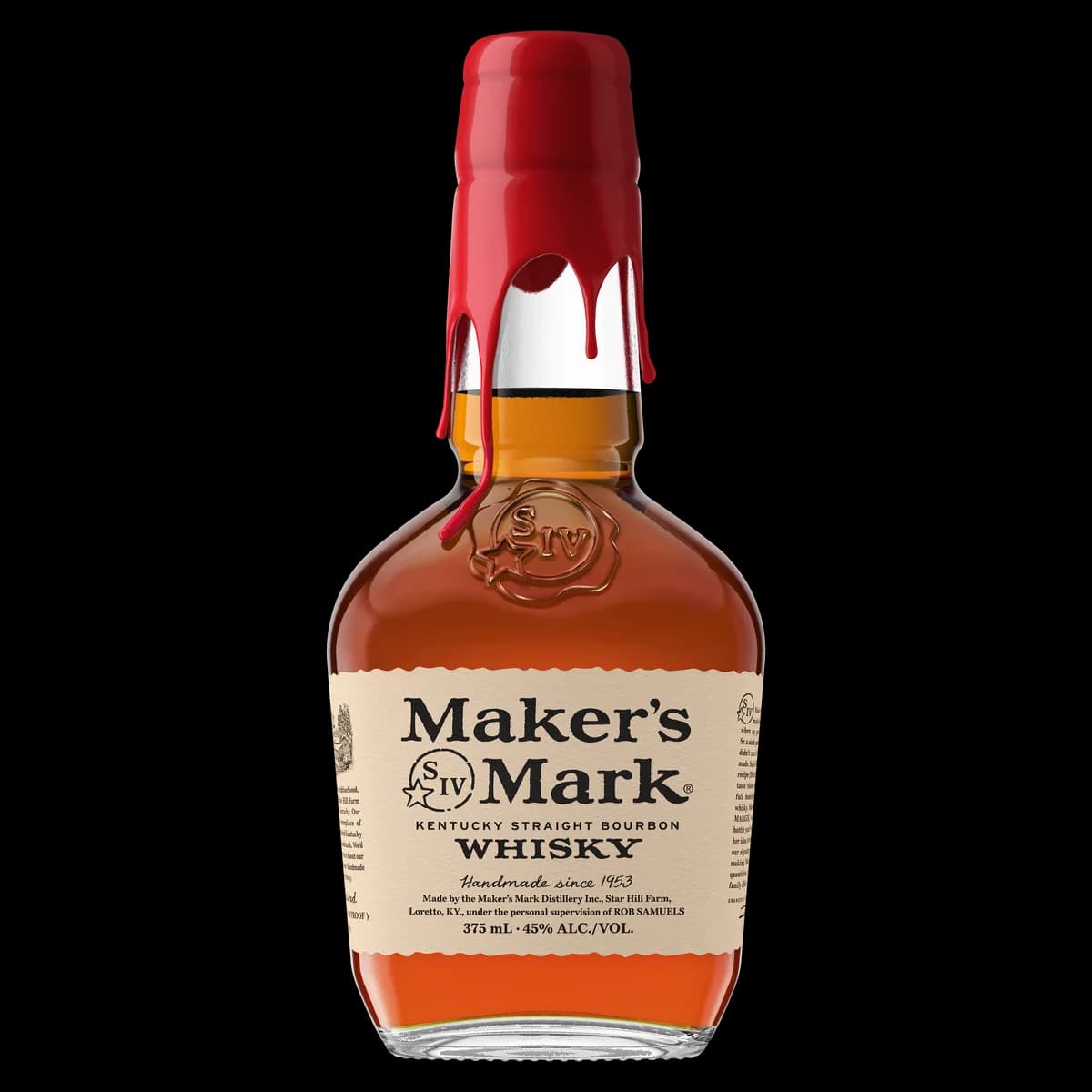
Maker's Mark
Suits: The baseline: understanding what the wheat mash bill does
Caramel, vanilla, soft baking spice, and a clean finish. This is the bourbon that taught a generation of drinkers what 'smooth' means. Aged to taste rather than a fixed timeline, which means the profile stays consistent year to year despite barrel variation. Widely available and one of the better values in wheated bourbon.
Explore in Digital Dram catalog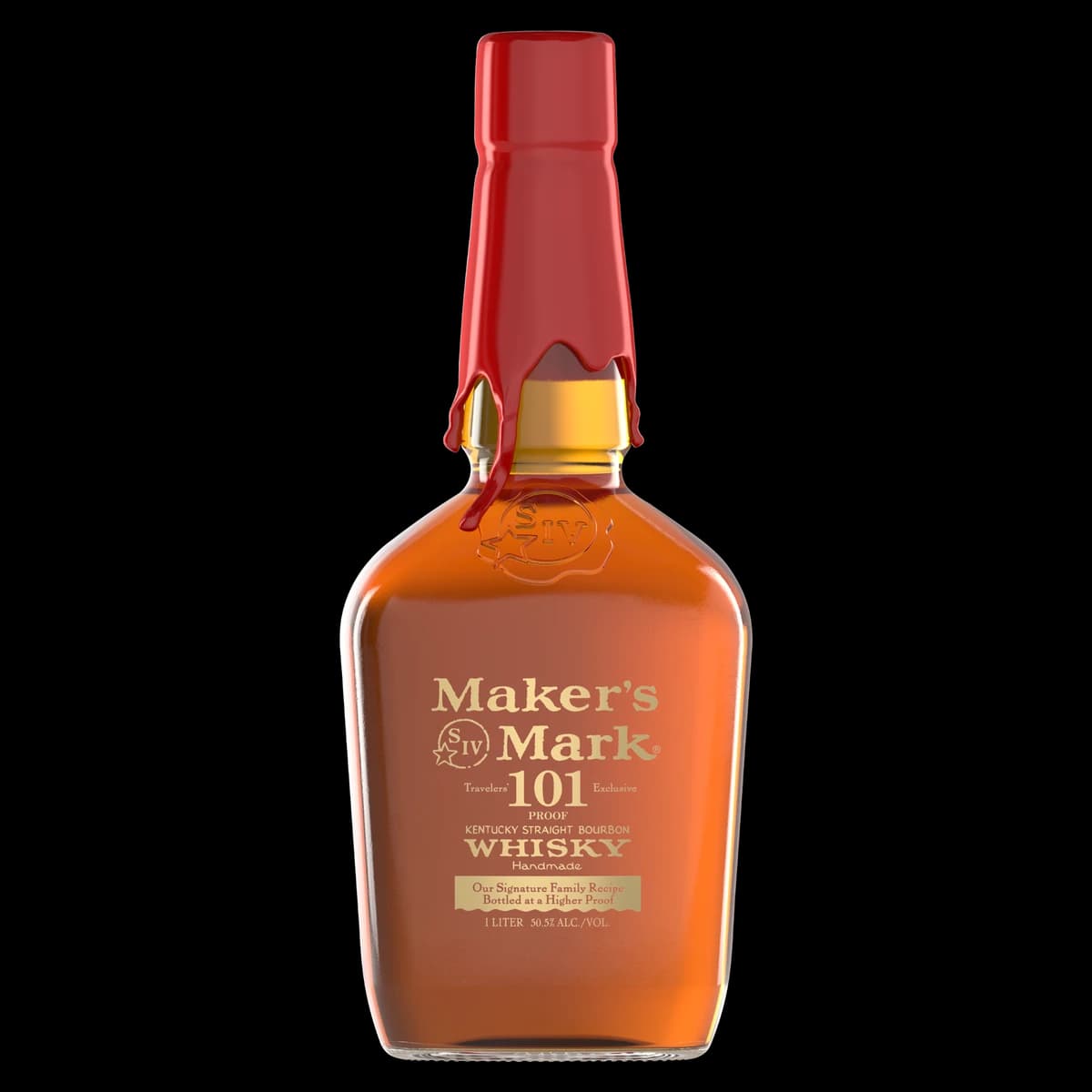
Maker's Mark 101
Suits: A step up in proof without losing the core identity
Same mash bill, higher proof. The extra 11 points of alcohol open up the caramel and add warmth without breaking the smoothness. A straightforward upgrade from the flagship for drinkers who want more presence.
Explore in Digital Dram catalogThe French Oak Stave Expressions
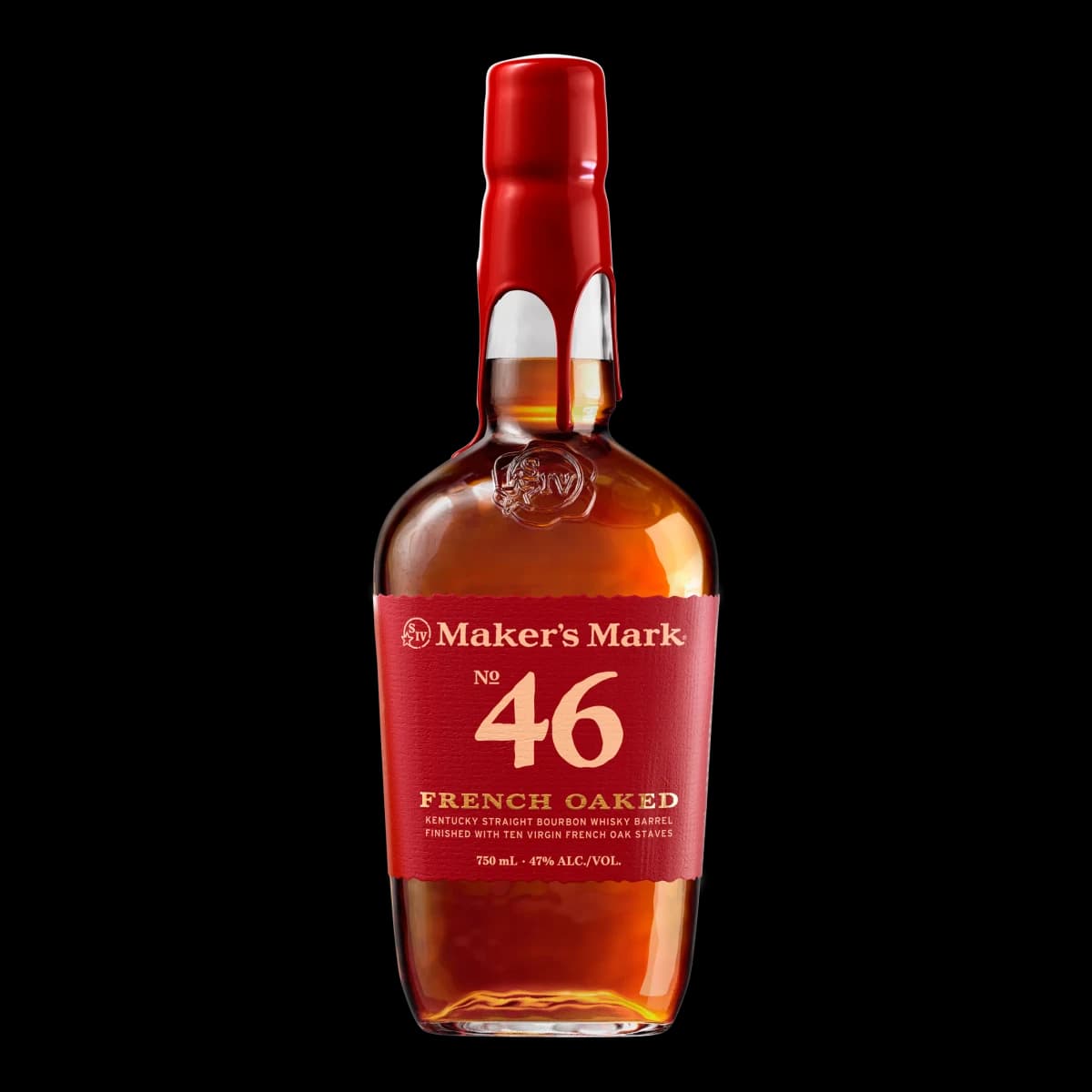
Maker's Mark 46
Suits: Seeing how wood finishing layers onto a wheated base
Ten seared French oak staves are inserted into fully matured barrels, then the bourbon finishes in a limestone cellar. The staves add baking spice, dried fruit, and caramel depth that the standard bottling lacks. Named after profile #46 from the stave testing files, the one Bill Samuels Jr. and master distiller Kevin Smith picked from dozens of candidates. Released in 2010, it was the first new Maker's Mark expression in over fifty years.
Explore in Digital Dram catalog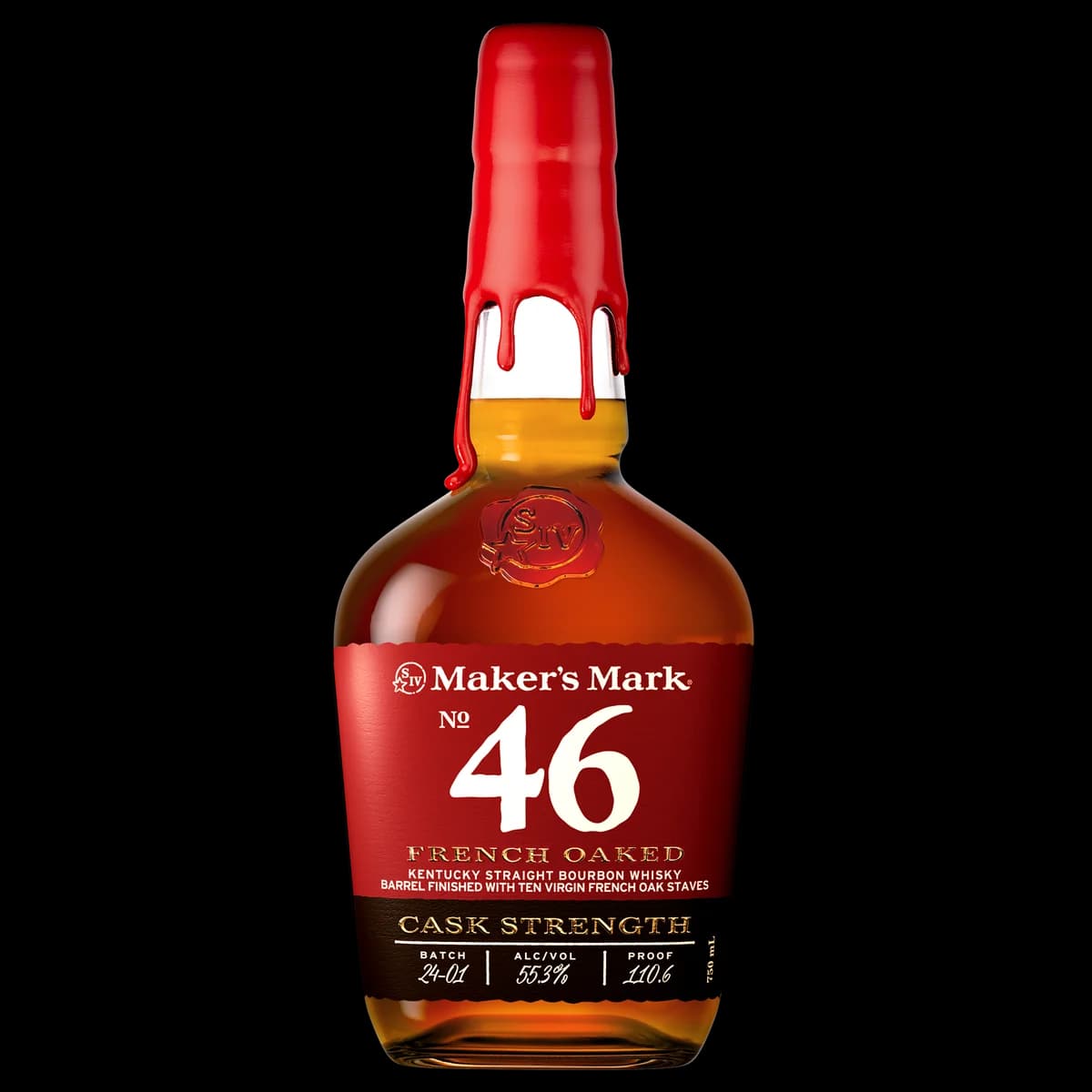
Maker's Mark 46 Cask Strength
~110 (varies by batch)Suits: The full expression of what this process can do
Everything the 46 does, without the ceiling. At cask strength, the French oak stave finish hits differently: brown butter, toasted marshmallow, dark cherry, and a finish that keeps going. The wheat mash bill absorbs the barrel intensity without flinching. Where most cask strength bourbons trade smoothness for power, this one refuses to choose. Hard to find. Harder to forget.
Explore in Digital Dram catalogBuild Your Bourbon DNA
Rate bottles, track your cellar, and discover expressions matched to your palate.
Create Free ProfileCask Strength and Single Barrel
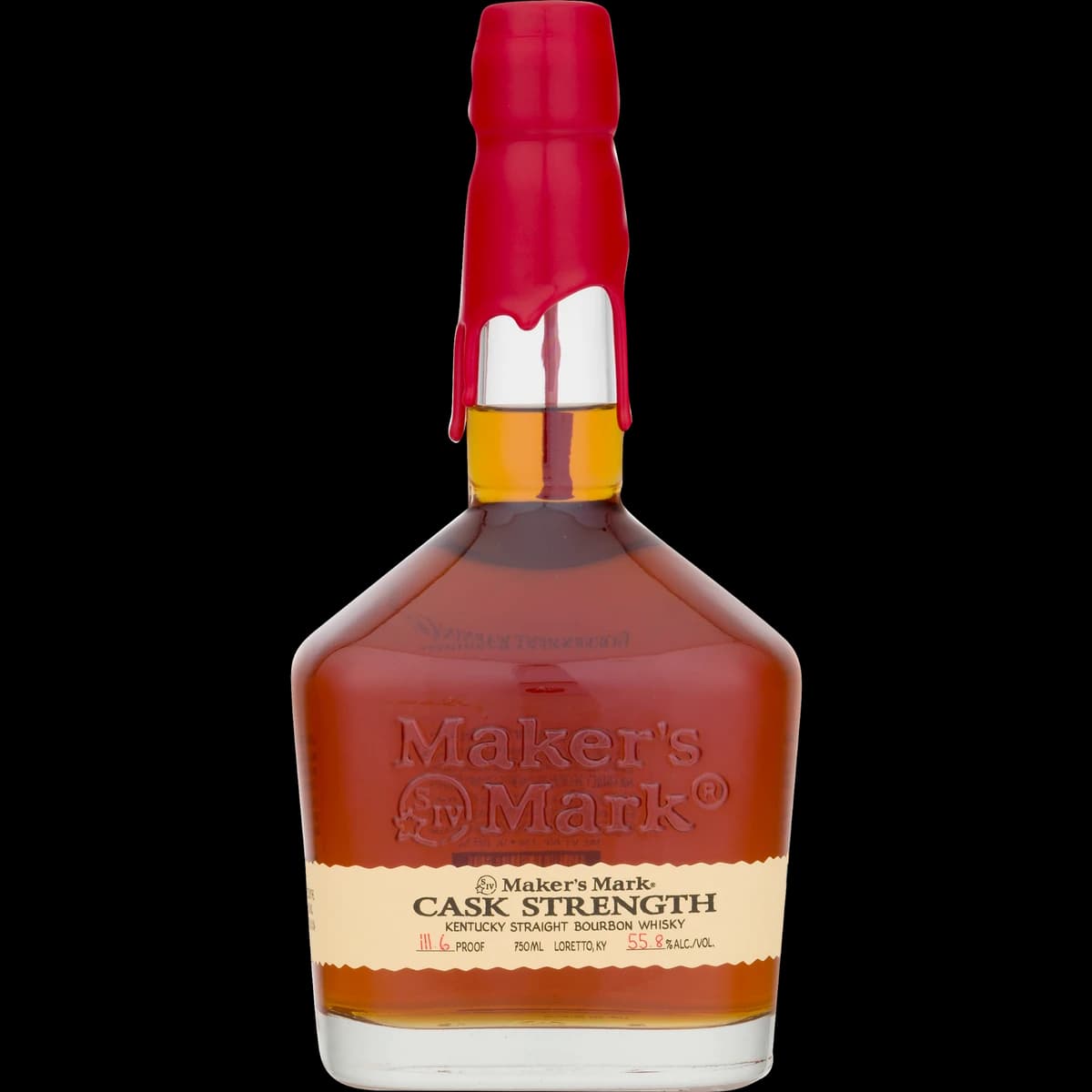
Maker's Mark Cask Strength
~108-114 (varies by batch)Suits: Tasting the flagship without the training wheels
The original recipe, uncut and unfiltered. Because of the low 110 entry proof and barrel rotation program, the final proof sometimes dips below entry, a quirk unique to Maker's Mark. Rich caramel, baked fruit, and a creamy mouthfeel that most barrel-proof bourbons do not have. An excellent entry into cask strength for anyone wary of the heat.
Explore in Digital Dram catalog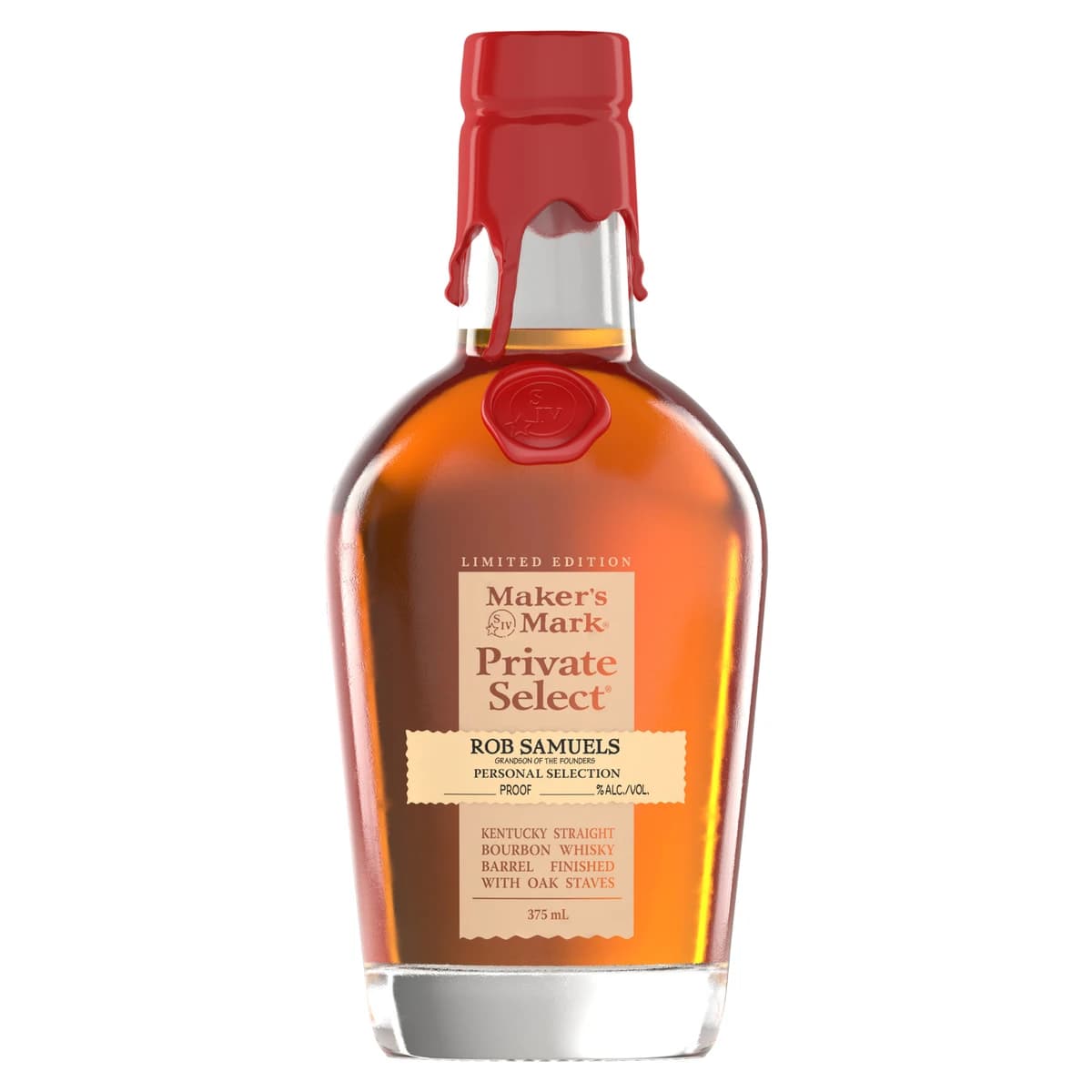
Maker's Mark Private Select
~107-114 (cask strength)Suits: Exploring how stave selection changes a bourbon's personality
Retailers and restaurants choose a combination of 10 finishing staves from five different profiles: Baked American Pure, Seared French Cuvee, the original 46 stave, Roasted French Mendiant, and Toasted French Spice. That creates 1,001 possible combinations, each finished for nine additional weeks in the limestone cellar. No two Private Select picks taste exactly alike, which is the point.
Explore in Digital Dram catalogThe Extended Aging Program
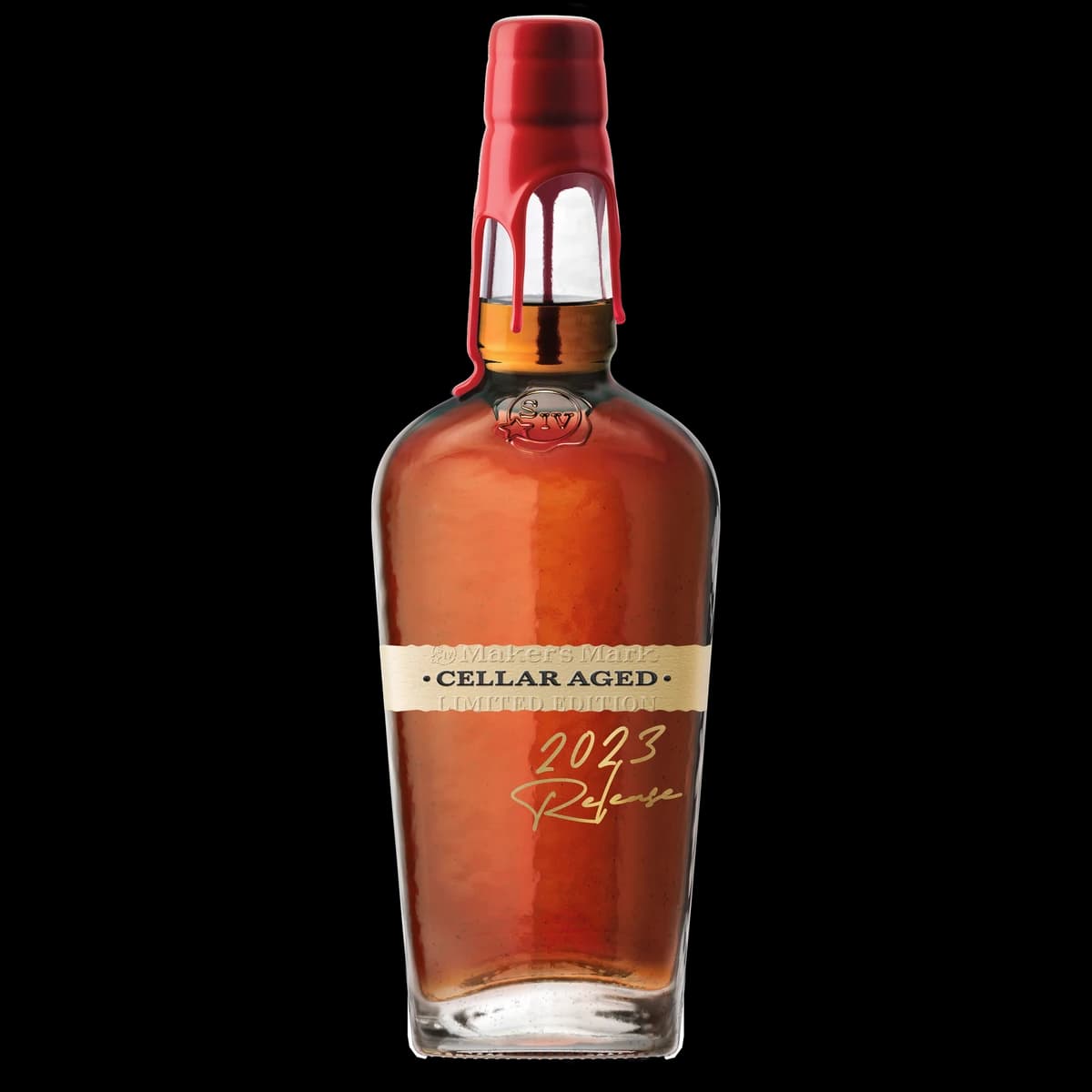
Maker's Mark Cellar Aged
~112-116 (varies by release)Suits: Seeing what this mash bill does with serious time in wood
Barrels age the standard 6 years in traditional warehouses, then transfer to a LEED-certified limestone cellar for another 5-8 years. The cellar's stable temperature slows extraction, adding complexity without the tannic bite that often shows up in over-aged bourbon. The 2025 release blends barrels at 11, 13, and 14 years. Rich, layered, and notably different from anything else in the lineup. Released annually, roughly $175.
Explore in Digital Dram catalogWood Finishing Series
The limited releases that push the stave-finishing concept further. Chapter One ran from 2019 to 2023 (RC6, SE4xPR5, FAE-01, FAE-02, BRT-01, BRT-02, BEP). Chapter Two started in 2024 with "The People Behind the Proof," each release honoring a different team at the distillery. The 2025 Keepers Release celebrates the warehouse crew who hand-rotate every barrel. These are annual releases, typically $75, and they sell through quickly.
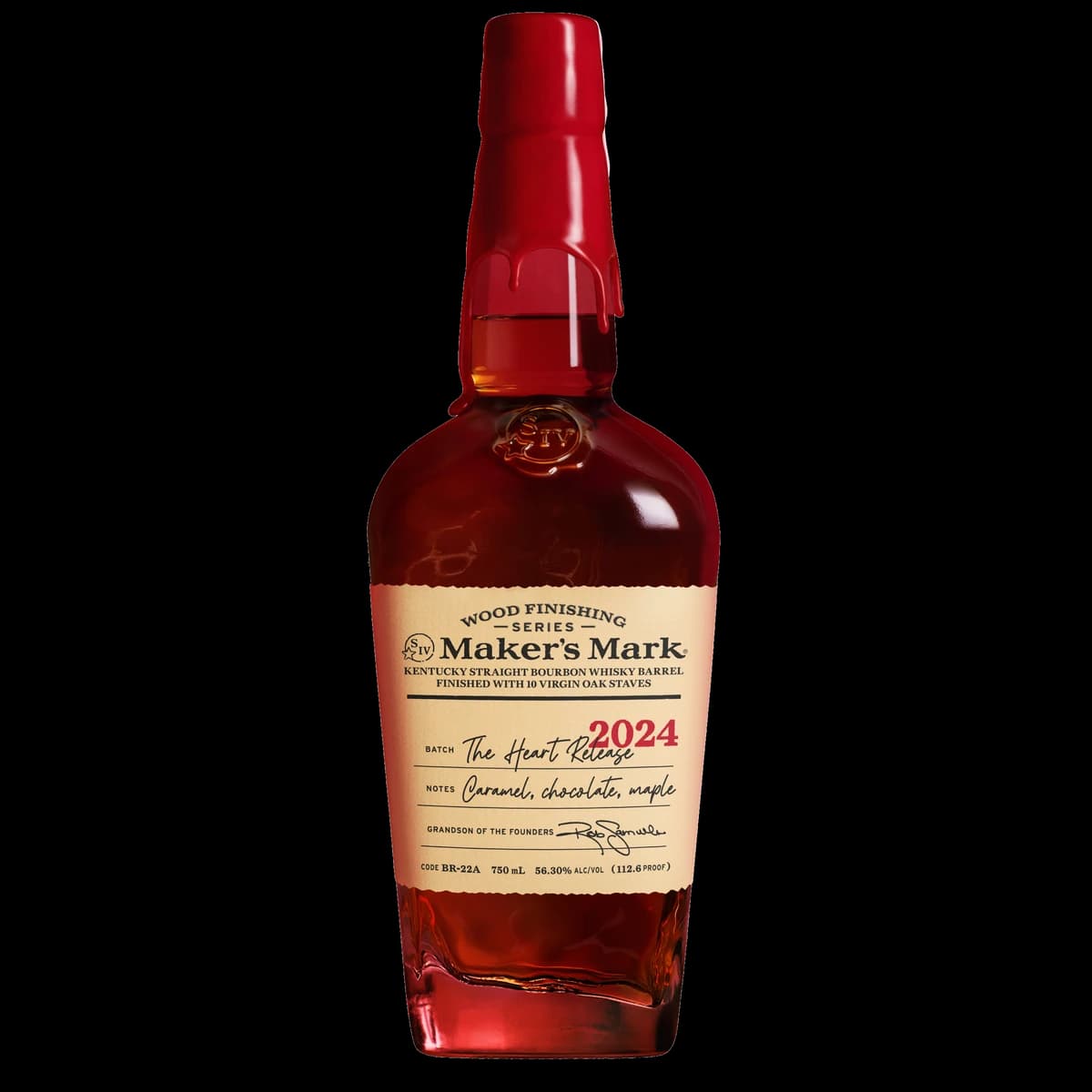
Maker's Mark Wood Finishing Series
~109-113 (varies by release)Suits: Tasting the frontier of Maker's Mark's stave experiments
Each release uses a different stave combination to explore a specific flavor direction. The best releases in the series have produced some of the most interesting bourbon Maker's Mark has ever bottled. Worth trying when you find one at retail, though the variation between releases is significant, and not every entry lands with the same impact.
Explore in Digital Dram catalogThe Stave Innovation
The seared French oak stave technique, developed for Maker's 46, deserves its own explanation because it changed how the entire industry thinks about barrel finishing.
Traditional barrel finishing means transferring whiskey into a previously used barrel: port casks, sherry casks, wine barrels. Maker's Mark does something different: they insert custom-profiled staves directly into the existing barrel. More surface area, more control over what flavors extract, and no influence from whatever the barrel previously held.
The Independent Stave Company, Maker's Mark's cooperage partner, developed dozens of stave profiles. Each uses different wood types, toasting levels, and searing techniques. Profile #46, the seared French oak stave, became the first product. The Private Select program opened up five stave profiles to external selection. The Wood Finishing Series uses combinations not available anywhere else.
One Mash Bill, Many Expressions
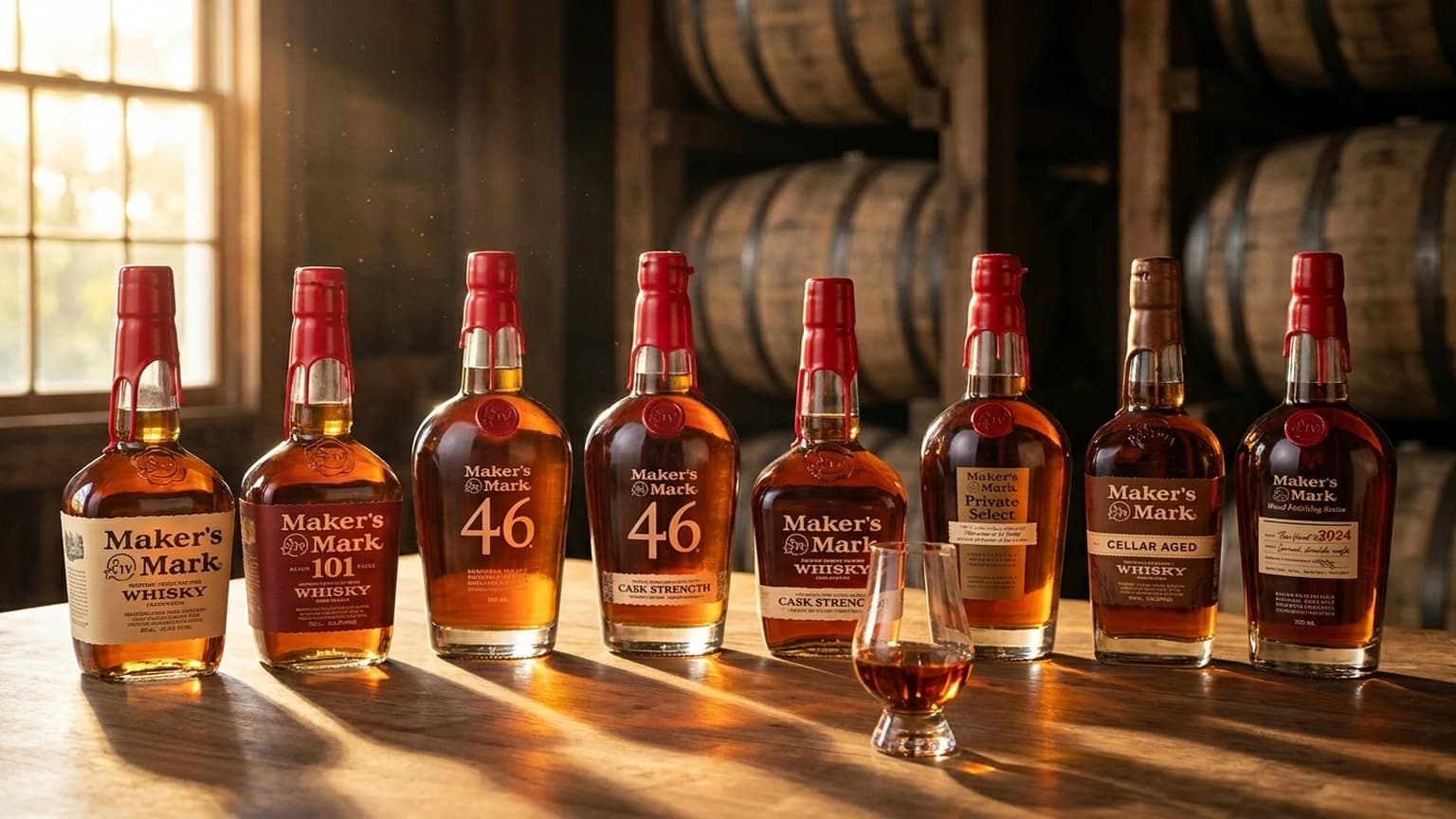
Every bottle in the Maker's Mark lineup starts from the same 70/16/14 recipe distilled at the same facility. The variation comes entirely from proof, aging duration, and stave finishing. Tasting across the range is one of the clearest demonstrations in bourbon of how post-distillation decisions shape what ends up in your glass.
The Place
Star Hill Farm sits on roughly 1,100 acres in Loretto, Kentucky, in rural Marion County about an hour south of Louisville. The property includes Burks Spring, a limestone-filtered water source that feeds production. The black buildings with red shutters were Margie Samuels' design. The distillery became the first in America designated a National Historic Landmark while still actively producing, in 1980.
More than 100,000 visitors come through annually. The standard tour covers production. The Oak Experience goes deeper, walking the property's white oak research forest. Everyone gets to hand-dip a bottle.
Become an Ambassador
Maker's Mark runs one of bourbon's original loyalty programs. Sign up as an Ambassador, and the distillery puts your name on a barrel aging in the warehouse. You get updates as it matures and an invitation to visit when it is ready. No cost, no catch.
Navigating the Range
If you are new to Maker's Mark, start with the flagship and the 46 side by side. The difference between them, the stave finishing effect, is one of the most instructive comparisons in bourbon.
From there, the Cask Strength shows what the wheat mash bill does at full power. The 46 Cask Strength shows what happens when you combine that power with the French oak stave finish. And if you can find a Cellar Aged release, it answers the question of whether this particular recipe benefits from extended aging. It does.
The Private Select bottles vary so much by stave selection that recommending one over another is pointless without knowing which staves were chosen. Ask the retailer which profiles are in theirs. Track your tastings across the lineup in your collection to see which stave profiles suit your palate.
Find Your Next Pour
Digital Dram helps you discover bourbon matched to what you already enjoy. Rate, track, and explore.
Join FreeMore in Distilleries

Bourbon Distilleries & Brands: The Complete Guide
How the big bourbon distilleries and their brands connect, which bottles share a mash bill, and how to find a stand-in when the allocated one is gone.

Earth Day Bourbon: Why Frey Ranch Sets the Estate Standard
Estate-grown bourbon is rare. Frey Ranch raises every grain on one Nevada farm, and a handful of other distilleries get close. A measured look for Earth Day 2026.
Stagg vs E.H. Taylor: Two Buffalo Trace Icons Compared
George T. Stagg and E.H. Taylor Small Batch compared side by side. Proof, flavor profiles, availability, and which suits your palate.