Blind-Taste Your Own Shelf: Find Out What You Actually Like
Strip away the marketing and test your own palate with a simple twenty-minute blind tasting experiment using bottles you already own.
On This Page
Got a tip? Know about an upcoming release, a shelf find, or industry news worth covering? Send it our way. We read every submission.
You stare at your home bar and reach for the familiar. We all build habits based on label designs, distillery legacies, and price tags. Removing those visual cues forces your palate to do the talking. A quick, solo blind tasting is the most honest way to test your assumptions about what you actually enjoy.
The Value of Flying Blind
Professional reviewers rely on label-free formats for a reason. Whisky Advocate scores whiskies for its Buying Guide blindly because there is no better method to eliminate bias.1 You can apply that same rigor at home without turning it into a massive, heavily planned event. Twenty minutes and two covered glasses are all you need to find out if your favorite bottle is truly your favorite pour.
The goal is not to guess the brand correctly. The goal is to discover which flavor profile your palate genuinely prefers when brand loyalty is out of the picture.
Setting Up the Test
Taking twenty minutes out of your evening requires minimal prep. Keep the mechanics simple. New Riff Distilling suggests pouring exactly one ounce into tulip-shaped glassware, keeping water on hand for palate cleansing and optional dilution, and using note paper.2 Their recommended sequence moves methodically from look to swirl and sniff, then sip, and finally assessing the finish. Add ice only after completing the neat round.2
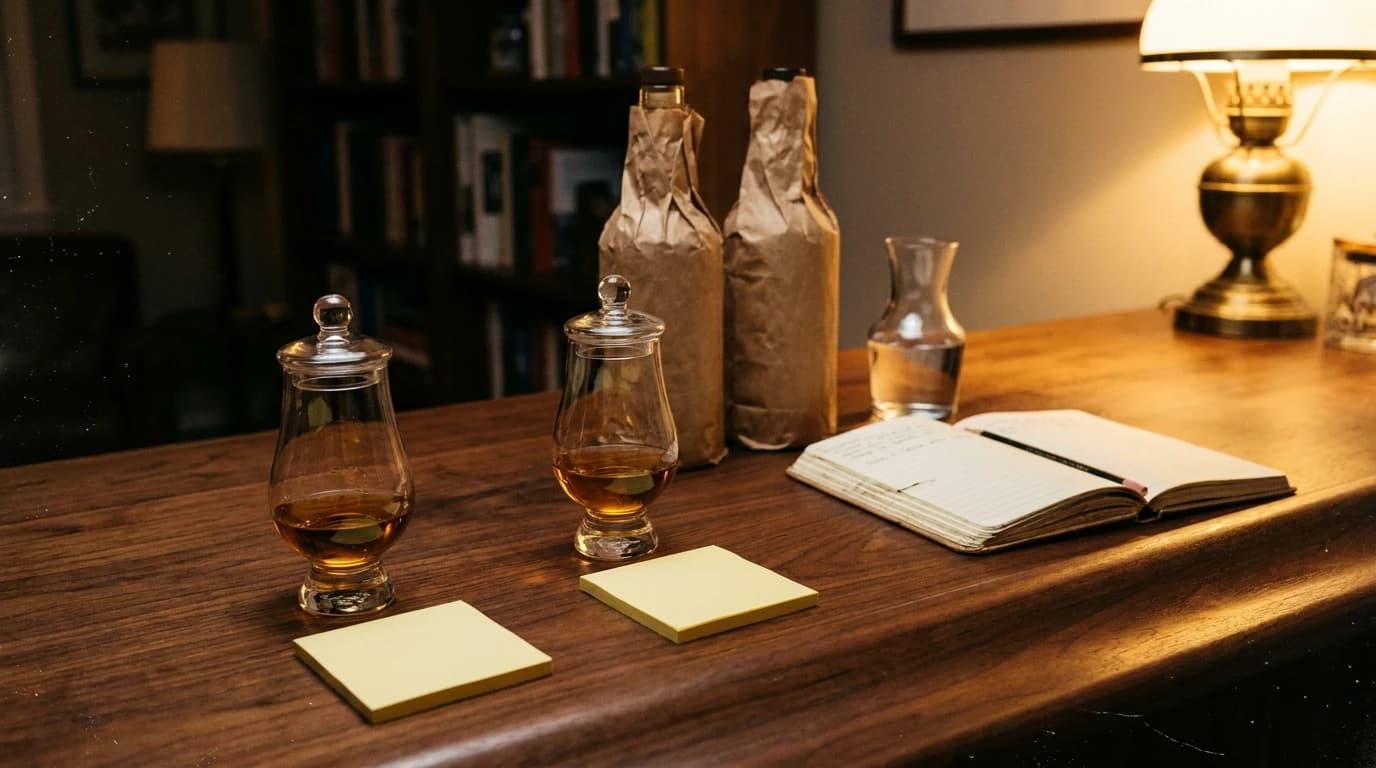
For a quick solo or two-person test, stick to covered glasses and sticky notes placed on the bottom of the glassware to track which pour is which. Have a partner pour for you, or mix the glasses around yourself until you lose track. If you want to turn this concept into a larger gathering with scorecards and reveal rules, read our dedicated guide on How to Host a Blind Bourbon Tasting at Home.
The Mash Bill Variable
Testing everything at once teaches you nothing. Comparing a barrel proof release to a 90-proof sipper only highlights the alcohol content. Instead, keep one variable constant.
The current federal standard dictates that bourbon whisky must be a fermented mash of at least 51 percent corn, distilled at no more than 160 proof, and stored in charred new oak barrels at no more than 125 proof.3 Straight bourbon requires at least two years of aging.3 Beyond those strict rules, distilleries play with the secondary grains. Corn provides the sweet foundation. Rye introduces baking spices, pepper, and botanical notes. Comparing a lower-rye recipe against a higher-rye counterpart lets you isolate exactly what that specific grain brings to the glass.
The High-Rye vs. Low-Rye Matchup
Two widely available staples make a perfect testing pair. Grab a bottle of Wild Turkey 101 and put it up against Four Roses Small Batch.
Wild Turkey 101
101Suits: A robust, traditional lower-rye benchmark.
A classic representation of a 13 percent rye mash bill, carrying enough proof to highlight its core vanilla and baking spice notes without overwhelming the palate.
Explore in Digital Dram catalogWild Turkey 101 utilizes a traditional lower-rye mash bill of 75 percent corn, 13 percent rye, and 12 percent malted barley.4 It is bottled at 101 proof with a 6-to-8-year age range.5 (A November 2021 review listed its MSRP at $25, highlighting its long-standing accessibility.4)
On the other side of the mat, Four Roses builds its profile on higher rye content. The Lawrenceburg, Kentucky distillery publicly identifies Mash Bill B as 60 percent corn, 35 percent rye, and 5 percent barley, while Mash Bill E features 75 percent corn, 20 percent rye, and 5 percent barley.6 Four Roses combines these two mash bills with five proprietary yeast strains to create ten distinct recipes.6 Four Roses Small Batch brings that high-rye profile together in a 90-proof release.7 For context on pricing, a Virginia ABC retail snapshot from August 18, 2026, listed the 750 mL bottle at a $34.99 sale price.7
Taste them side by side without knowing which is which. The wild card is seeing if the bold, peppery spice of the higher rye content wins your favor over the classic, corn-forward sweetness of the traditional recipe.
Track Your Tasting Results
Download Digital DramWhat Your Pick Tells You
The reveal guides your next purchase. If you consistently pick the Four Roses glass, your palate leans heavily toward high-rye bourbons. That signals you should seek out other spicy, fruit-forward expressions on your next retail run.
If the Wild Turkey 101 wins out, you favor a more traditional, sweeter profile. You might then explore something like Elijah Craig Small Batch. Heaven Hill identifies this Bardstown, Kentucky release as its signature bourbon, bottled at 94 proof with an 8-to-12-year age range.8
Tasting blindly strips away the marketing, the bottle shape, and the external noise. You are left with exactly what is in the glass. Spend twenty minutes trusting your own senses. You might just surprise yourself with what you actually enjoy.
Digital Dram reminds you that bourbon is best enjoyed responsibly. Readers must be 21 and older to purchase and consume alcohol.
Footnotes
-
Should You Blind Taste Whisky? - Whisky Advocate - 2018-12-19 ↩
-
Bourbon Tasting Events & Your Guide to Hosting a Tasting at Home - New Riff Distilling - 2026-04-07 ↩ ↩2
-
27 CFR § 5.143 - Whisky - Electronic Code of Federal Regulations / Alcohol and Tobacco Tax and Trade Bureau - 2026-08-14 ↩ ↩2
-
Wild Turkey 101 Bourbon Review - Breaking Bourbon - 2021-11-03 ↩ ↩2
-
Wild Turkey 101: Straight Bourbon Whiskey - Wild Turkey Bourbon - 2026-08-18 ↩
-
Four Roses Small Batch Bourbon - Virginia Alcoholic Beverage Control Authority - 2026-08-18 ↩ ↩2
-
Elijah Craig Small Batch Bourbon - Heaven Hill Distillery - 2026-08-18 ↩
More in Education
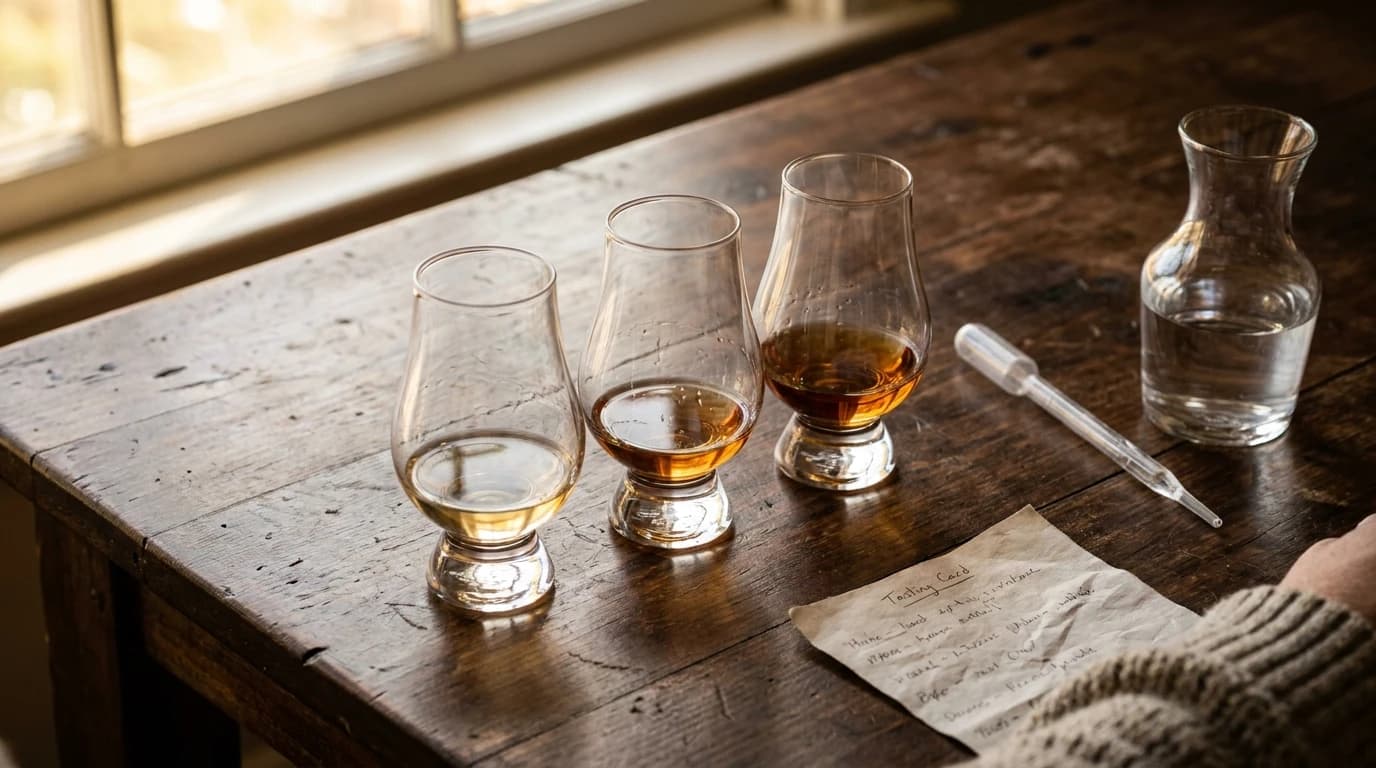
Transitioning Your Palate: Moving to High-Proof Pours for Fall
Learn how to use proof as a dial rather than a test. Build a fall-ready tasting progression from approachable wheated bourbons to port-finished cask strength releases.
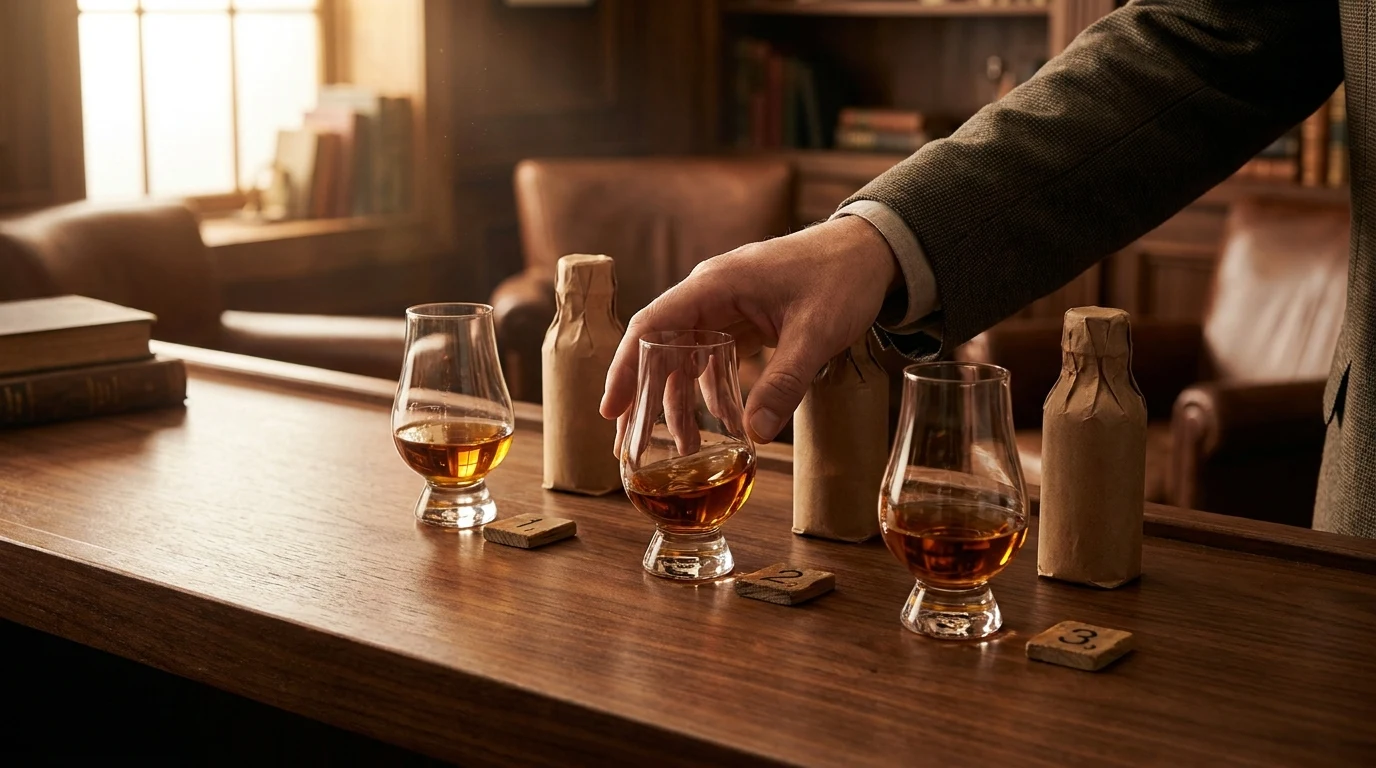
What Is a Blind Tasting? The Honest Way to Drink Bourbon
What a blind bourbon tasting is, why labels bias your palate, and how to host your first blind at home in five minutes with three bottles and three paper bags.

How to Start a Bourbon Collection: A Practical Guide
Build a bourbon cellar with intention. Five foundation categories, common mistakes to avoid, and why tracking what you drink changes how you buy.